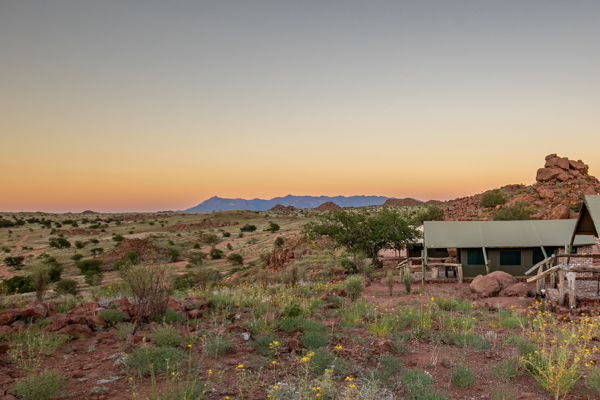
Ondjamba Hills is nestled within some of the most iconic landscapes in Damaraland, Namibia, Ondjamba Camp offers an eclectic fusion of nature, rustic old-world charm safari with modern chic. Described simply: “It’s in harmony with the dramatic environment and nature”.
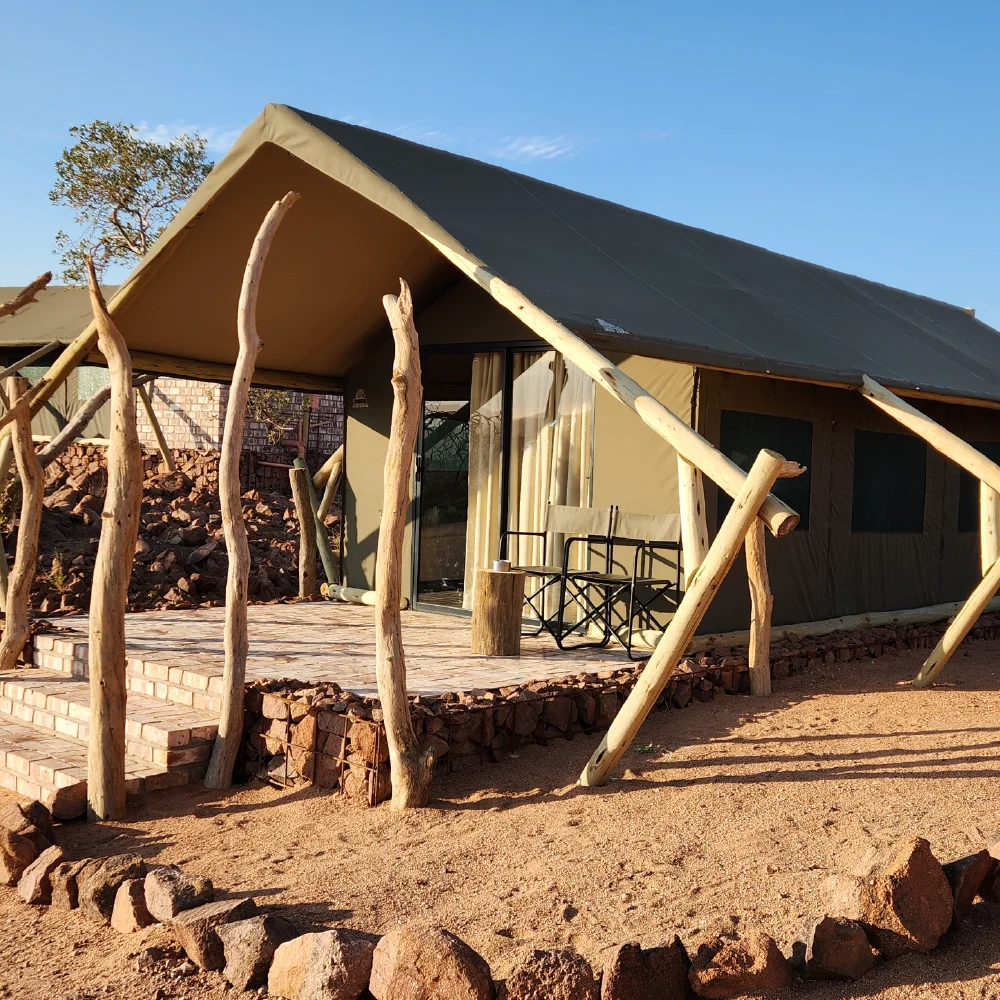
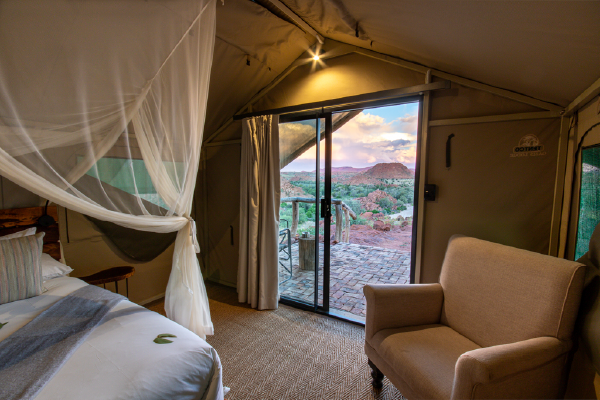
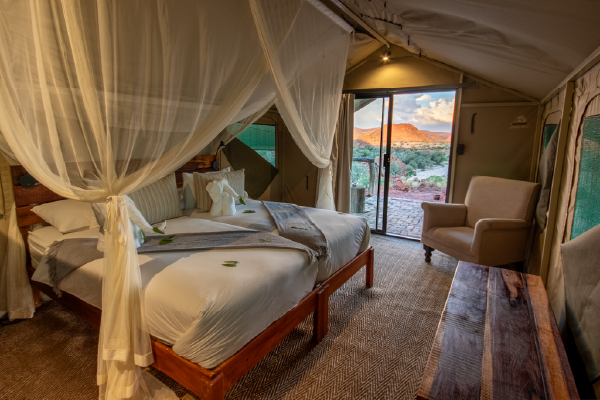
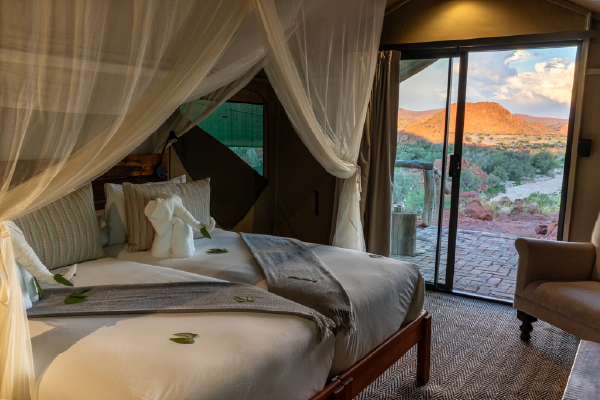
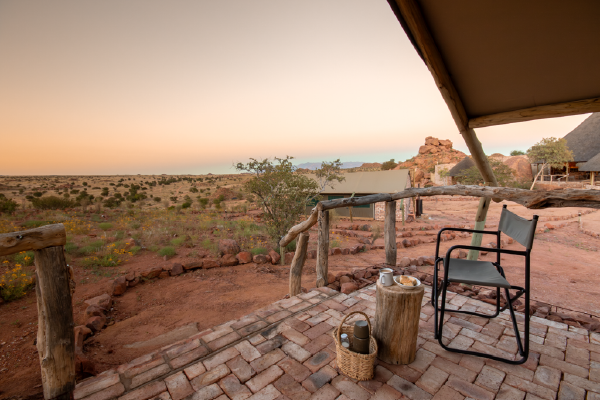
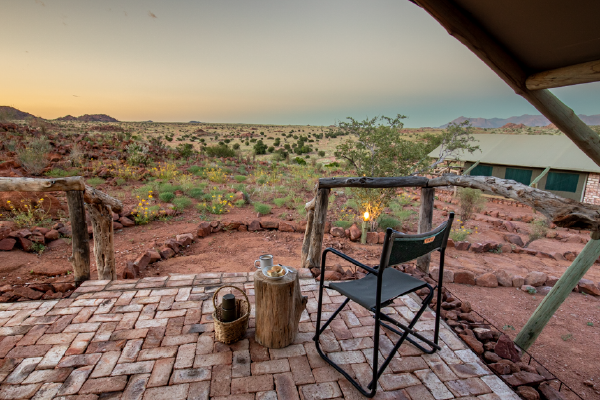
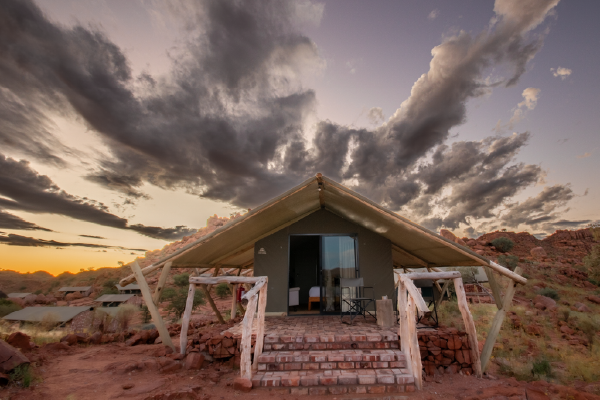
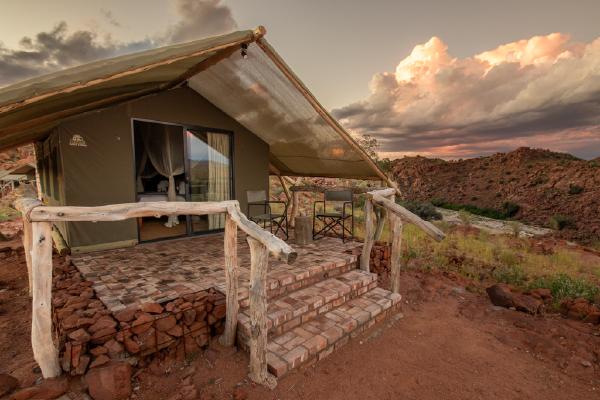
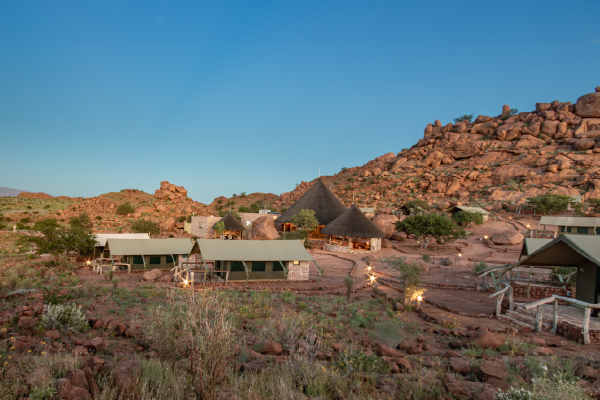
Large Meru style safari tents embellished with brick en-suite bathrooms with large glass sliding doors for unimpeded views. The camp is fully off-grid, having its own boreholes for water and being powered by solar energy with a back-up generator. Although the camp is powered by solar, water is heated using old-school, traditional “donkies” (geysers heated by fire) adding the sense of uniqueness of the great outdoors and the smell of woodsmoke.
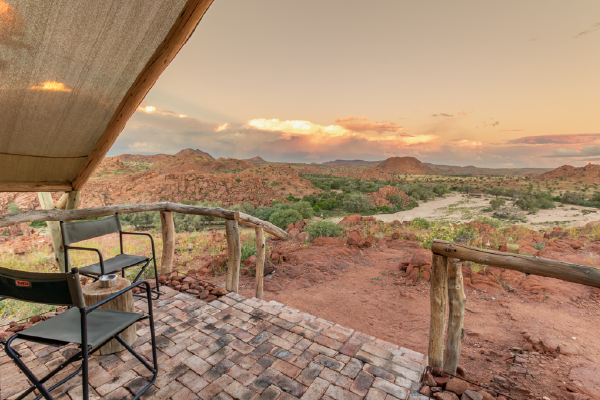
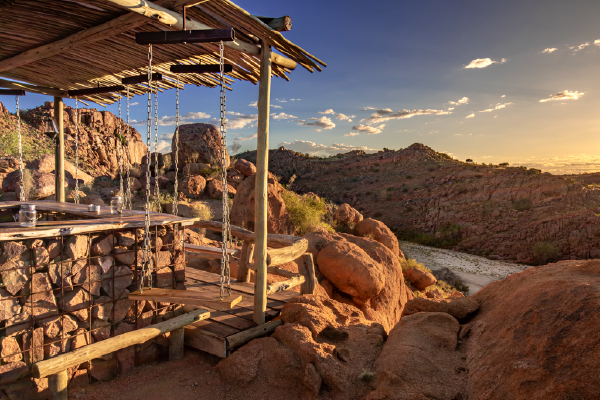
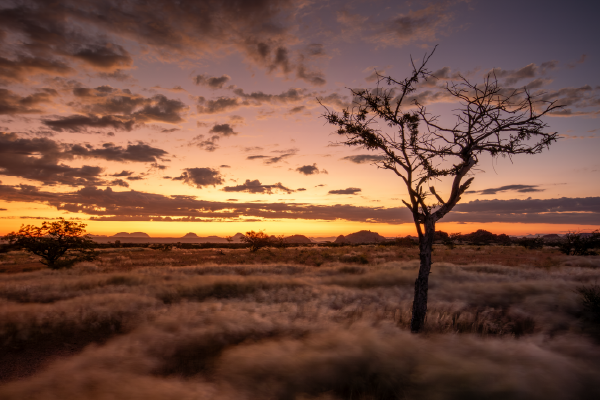
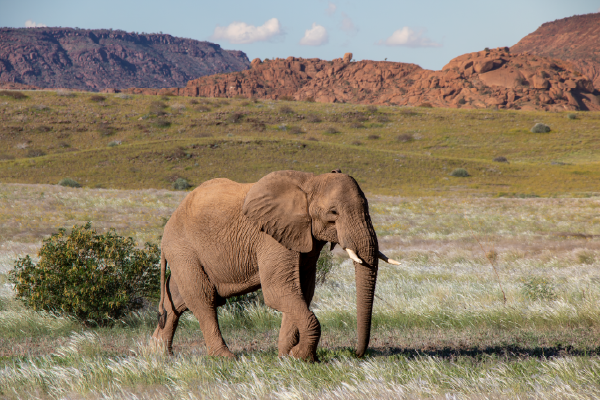
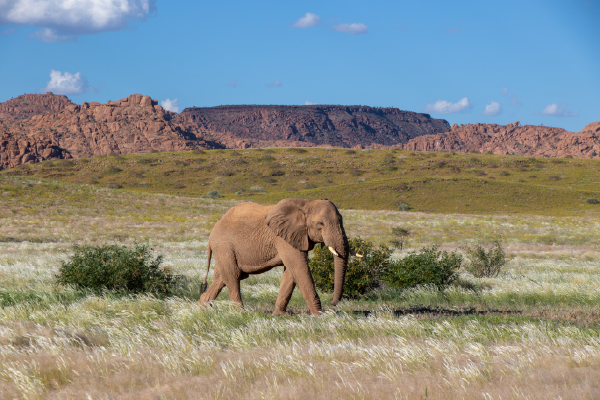
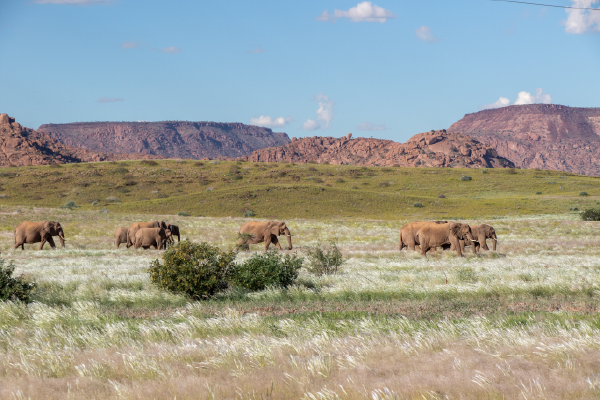
Everything at Ondjamba is about the romance and experience of travel in Africa. Untouched wilderness at your doorstep, with views on the majestic Brandberg (Namibia’s highest Mountain) and the ephemeral Ugab riverbed and the granite “kopjes” dotted in the landscape.
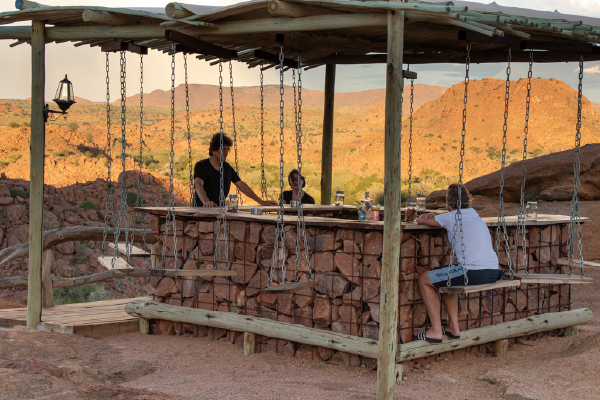
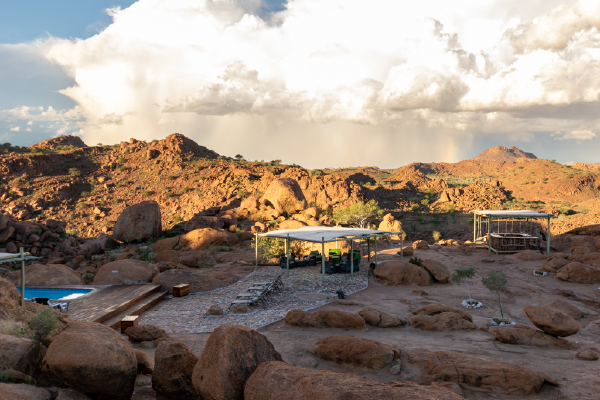
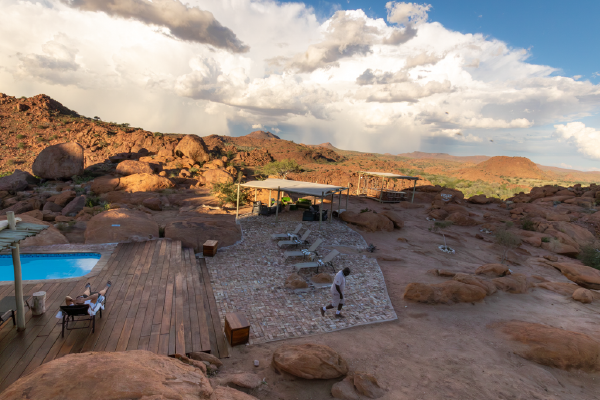
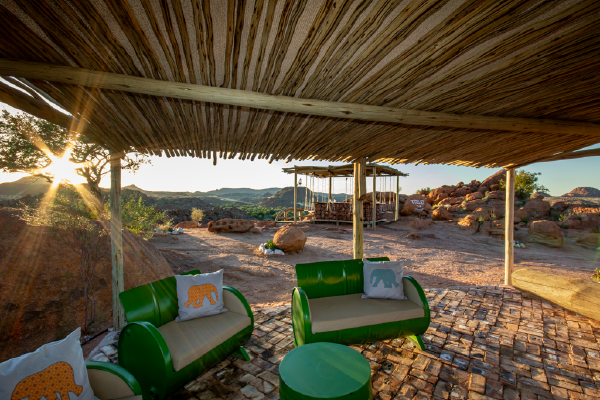
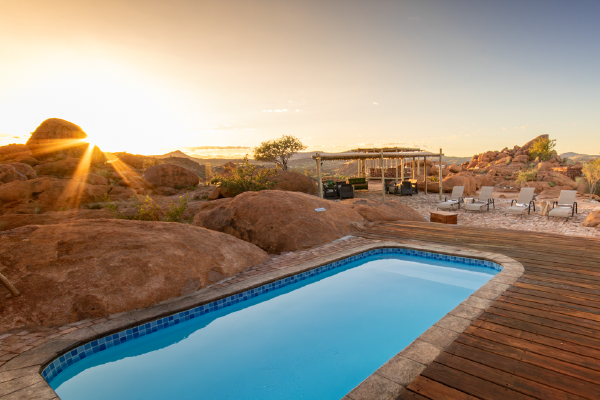
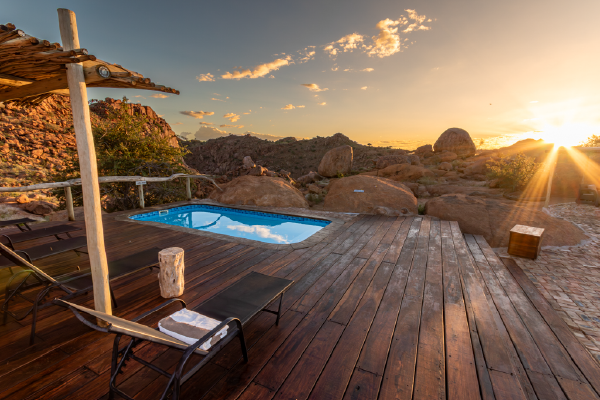
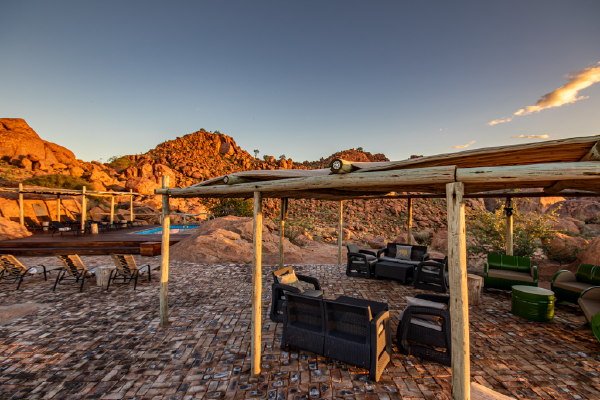
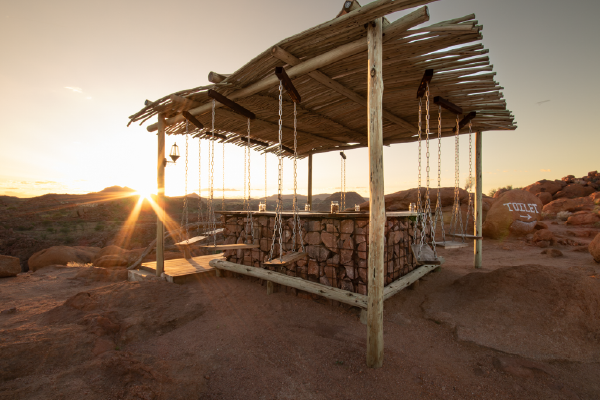
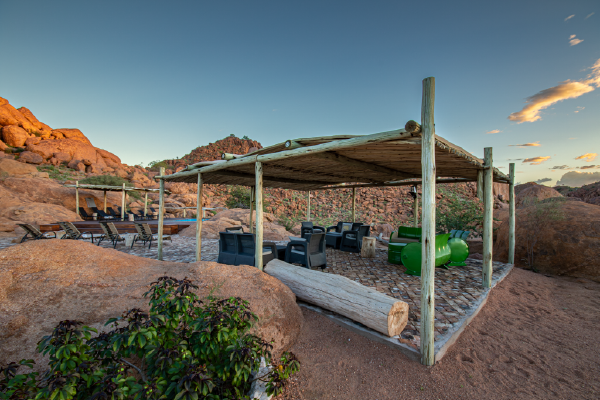
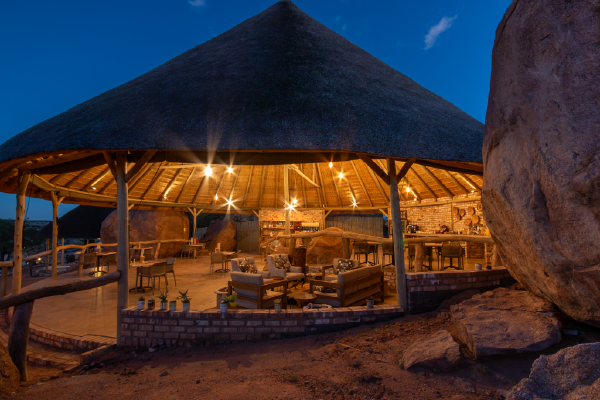
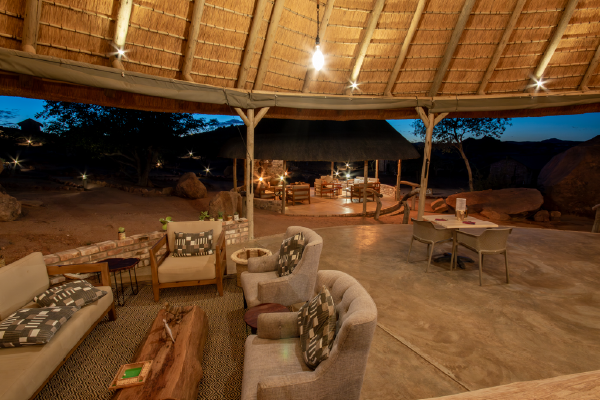
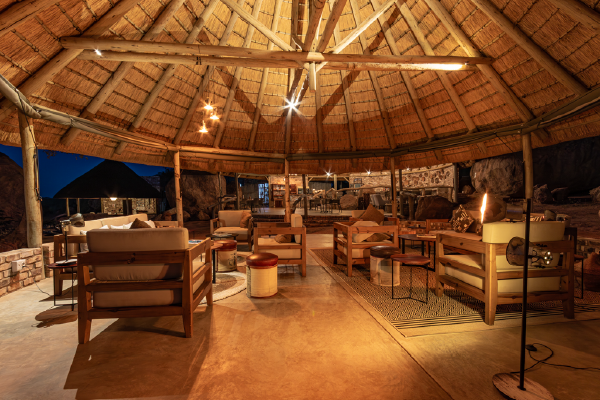
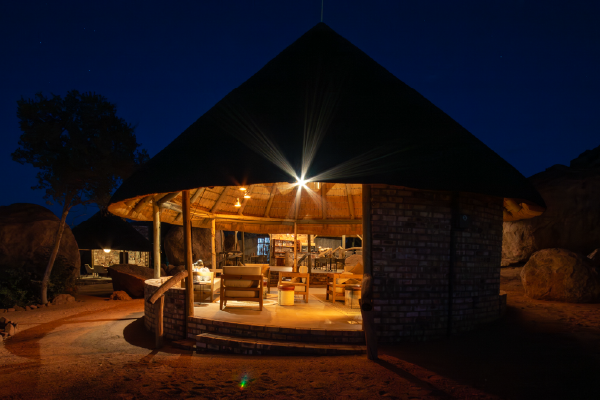
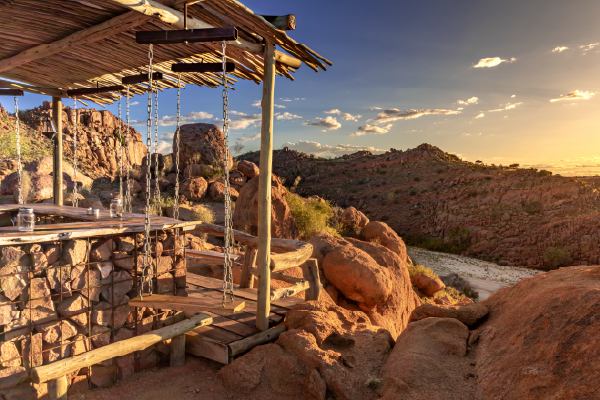
The common areas are built using brick, wooden poles, thatch and canvas – all circular structures to fit in aesthetically with the granite boulders in the area. Its architecture lets the structures blend into the surrounding boulders dotted around the area with some even being part of the infrastructure. The highlight however remains the pristine landscape the camp is located in.

Large Meru style safari tents embellished with brick en-suite bathrooms with large glass sliding doors for unimpeded views. The camp is fully off-grid, having its own boreholes for water and being powered by solar energy with a back-up generator. Although the camp is powered by solar, water is heated using old-school, traditional “donkies” (geysers heated by fire) adding the sense of uniqueness of the great outdoors and the smell of woodsmoke.
Everything at Ondjamba is about the romance and experience of travel in Africa. Untouched wilderness at your doorstep, with views on the majestic Brandberg (Namibia’s highest Mountain) and the ephemeral Ugab riverbed and the granite “kopjes” dotted in the landscape.
The common areas are built using brick, wooden poles, thatch and canvas – all circular structures to fit in aesthetically with the granite boulders in the area. Its architecture lets the structures blend into the surrounding boulders dotted around the area with some even being part of the infrastructure. The highlight however remains the pristine landscape the camp is located in.